Teacher‑approved, kid‑friendly, inclusive
Classroom holiday party ideas
A classroom party should be fun for the kids, easy for whoever’s running it, and welcoming to every family. Here’s the whole plan: a clear party‑hour flow, simple station games and crafts that work for a full class, allergy‑safe snacks, ideas by grade, and the two things that actually keep it calm — a supply checklist and enough helpers.
Start here
Three rules before you plan anything
Classroom parties have a few non‑negotiables that make everything else easier:
- Check with the teacher first. Always. They know the allergies, the school’s rules on food and holidays, and what’s worked before. Nothing goes in without their sign‑off.
- Keep it inclusive. Frame it as a “winter celebration” rather than one holiday, so every child and family feels included regardless of what they celebrate at home.
- Plan for allergies up front. Food allergies are common and serious. Get the class list from the teacher and build the snacks around it, not the other way around.
Get those three right and the rest is just keeping it fun and moving.
Games & crafts
Activities that work for a whole class
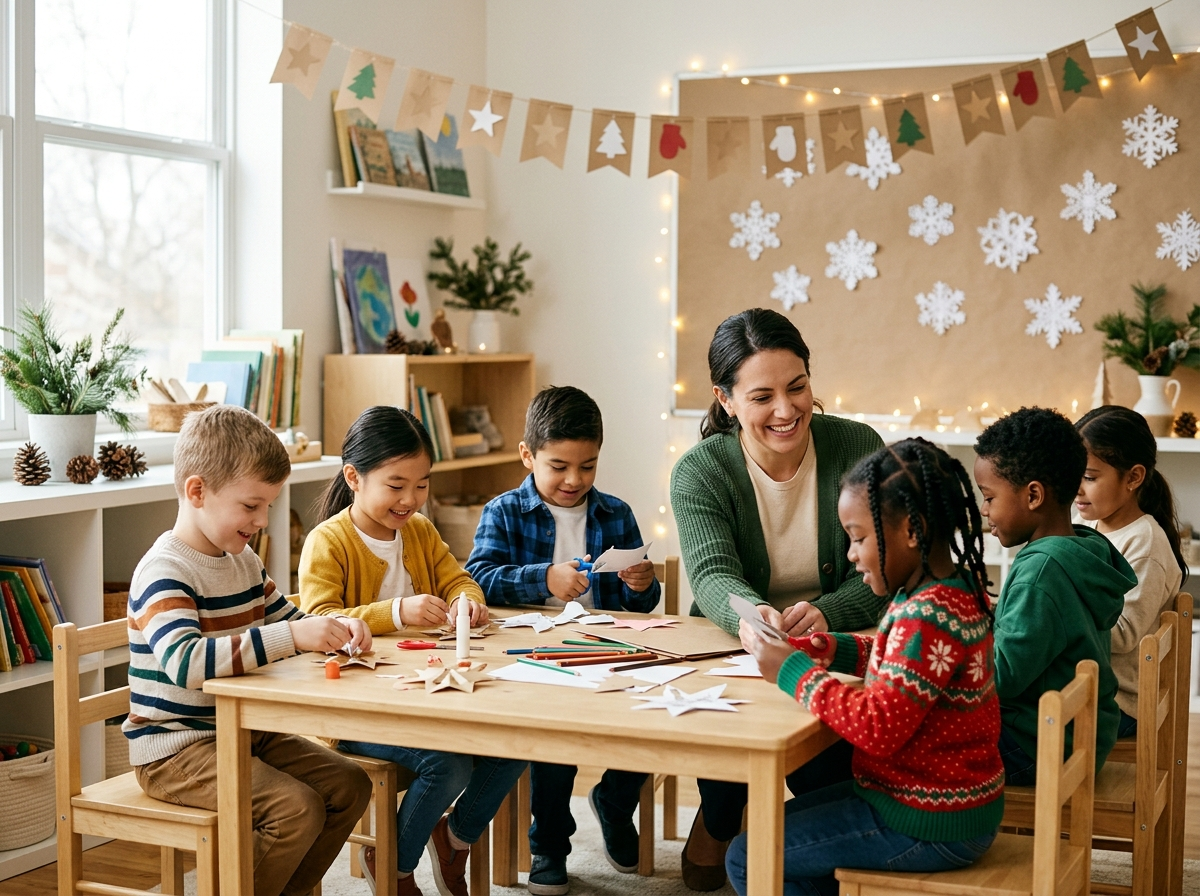
The best classroom activities are simple to explain, run in stations so kids aren’t all waiting, and don’t need much cleanup:
- Craft stations. Ornament decorating, paper snowflakes, handprint reindeer, or a winter card to take home. Set them up in rotations so small groups move through.
- A cookie‑ or gingerbread‑decorating station (allergy permitting) that doubles as the snack and the craft.
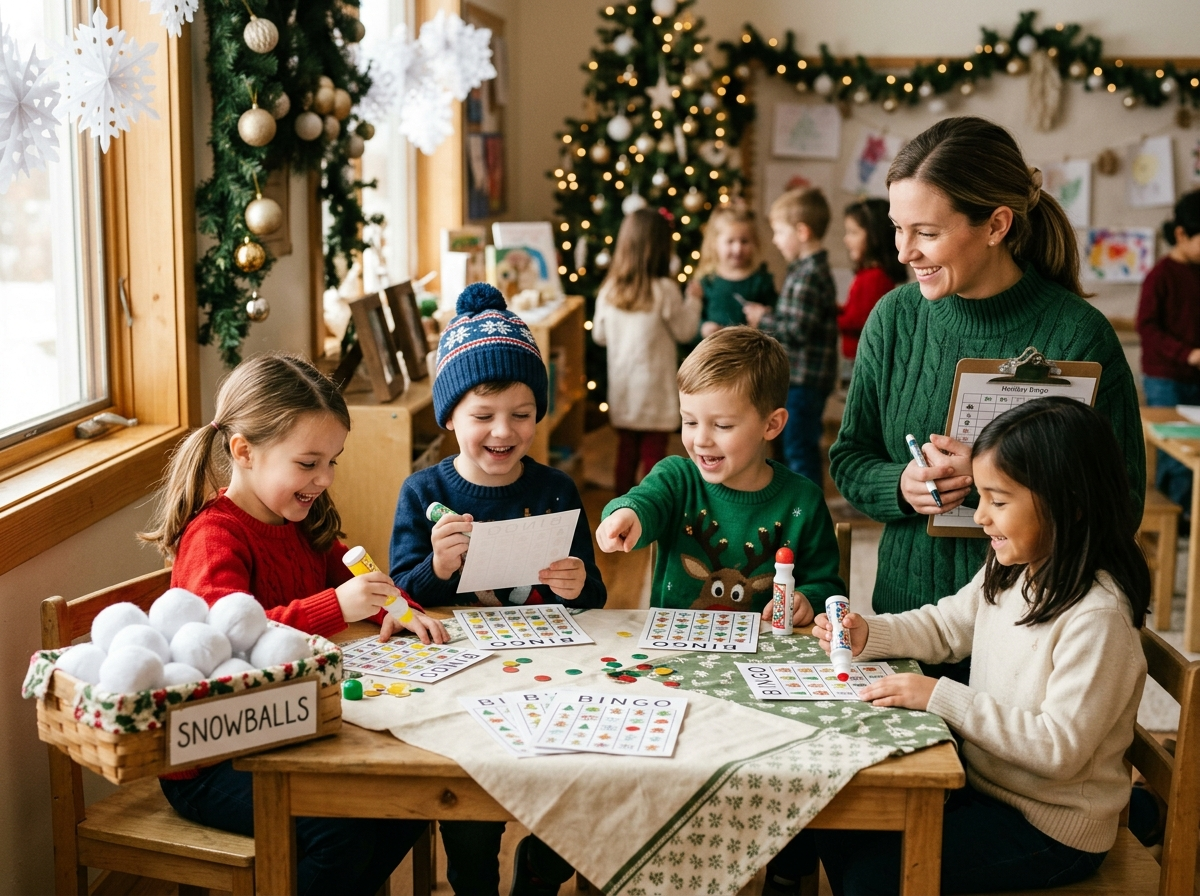
- Classic group games: pin‑the‑nose‑on‑the‑reindeer, holiday bingo, a snowball toss with paper “snowballs,” musical chairs to holiday songs.
- A story and a craft for younger grades — a read‑aloud winter book followed by a matching make‑and‑take.
- A guessing jar (how many pom‑poms?) that keeps early finishers busy.
Station kit
What goes in each station
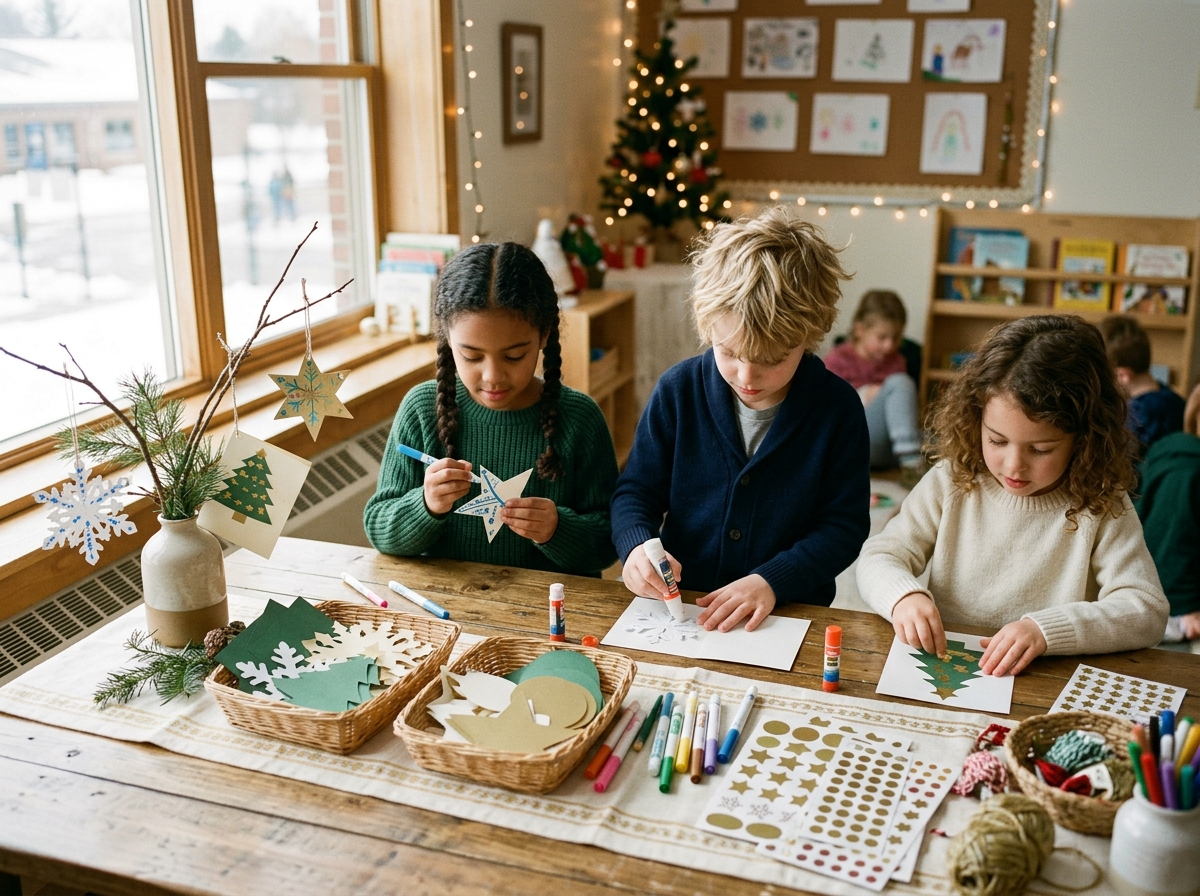
“Set up stations” is easy to say and harder to walk in with. Here’s a four‑station setup you can build straight from this table — each one runs about 7–8 minutes per group and needs almost no explaining:
| Station | What you bring | What the kids do |
|---|---|---|
| Craft (make‑and‑take) | Pre‑cut card stock, stickers, markers, glue sticks, a sample to copy. | Decorate a winter card or ornament to take home. |
| Snack | Pre‑portioned allergy‑safe snack in cups, napkins, a labeled allergen card. | Sit, eat, and rest before the next station. |
| Game | Bingo cards + markers, or paper snowballs + a bucket. | Play a quick round with the helper keeping score. |
| Quiet / early‑finisher | Guessing jar, a winter coloring sheet, a stack of stickers. | Guess the jar count or color while others finish. |
Bring everything pre‑cut and pre‑portioned — party time is not prep time. A sample of each craft at the station saves you explaining it twenty‑five times.
Snacks
Allergy‑safe classroom snacks
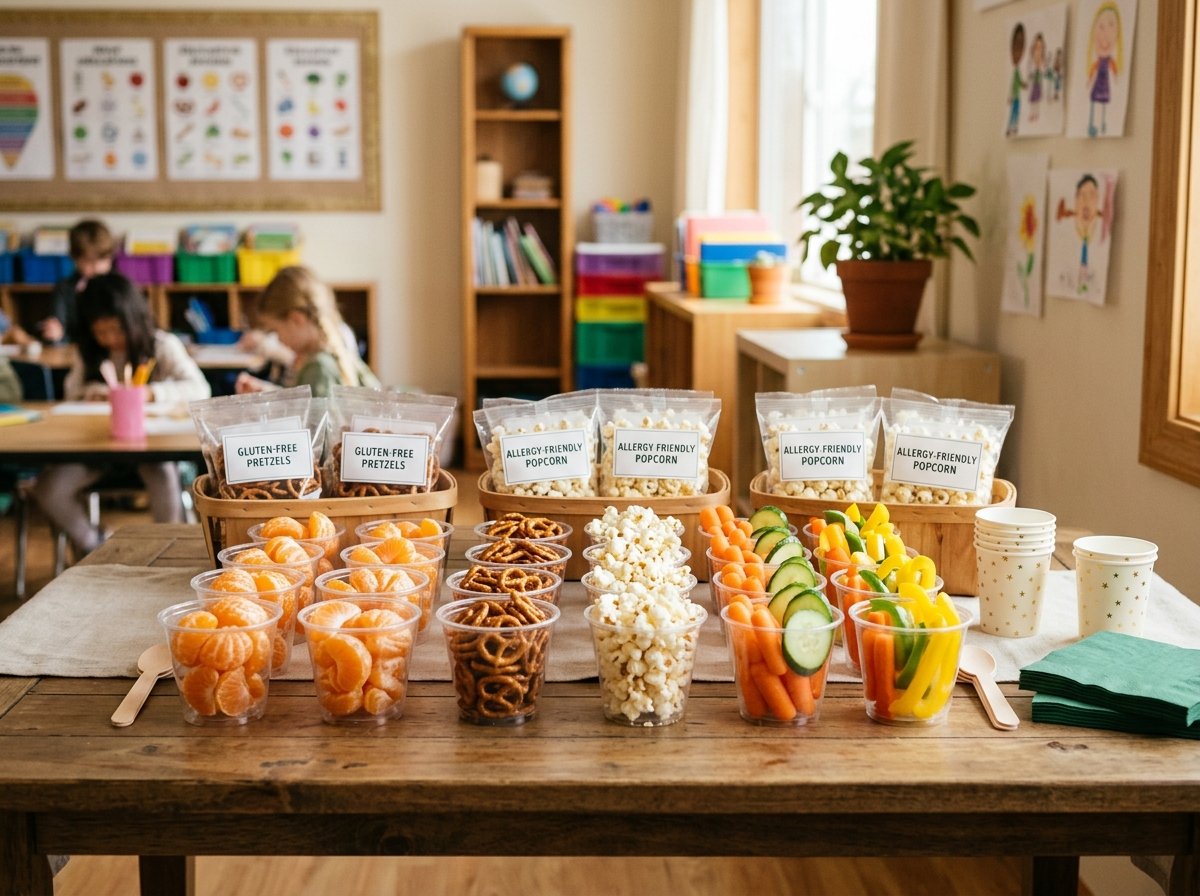
Food is where classroom parties get tricky, so keep it simple and safe. Get the allergy list from the teacher first and plan around it. The common allergens to watch are peanuts, tree nuts, milk, eggs, wheat, soy, sesame, fish, and shellfish — and remember cross‑contamination counts, so “made in a facility that also processes nuts” can still be a problem for a sensitive child.
Generally safer crowd‑pleasers: clementines and other whole fruit, pretzels, popcorn, veggie cups, and store‑bought items with clear ingredient labels (many schools require packaged, labeled food rather than homemade). Avoid nuts entirely unless you’ve confirmed it’s safe. Two practical safeguards: keep a non‑food option — a small toy or sticker — for any child who can’t have what’s served, and if a child has a severe allergy, ask the teacher whether that family would prefer to send their own safe treat. Label everything so the teacher and helpers can see what’s in it at a glance.
The plan
How to run the party hour
Most classroom parties get about an hour. Stations and a clear flow keep twenty‑five kids from descending into chaos:
| Time | What’s happening |
|---|---|
| First 10 min | Settle in, explain the stations, split the class into small groups. |
| Next 30 min | Rotate groups through the 3–4 stations above, a few minutes each. |
| Next 15 min | One whole‑class game everyone plays together — bingo, musical chairs, a story. |
| Last 5 min | Hand out take‑homes, quick cleanup with the kids helping, back to the teacher. |
One scheduling note: ask the teacher when the party fits the day — right before lunch or at the end of the day usually works best, and check it doesn’t collide with a “specials” block (PE, music, library). A child who’d rather not join in should have an easy out, like the quiet station — never make participation the price of being included.
Helpers
Line up your helpers (and what to bring)
The difference between a calm party and one adult chasing twenty‑five kids is helpers: aim for roughly one per station. Send this sign‑up to families a week ahead — it spreads the cost and the work, and people are far more likely to say yes to one specific thing than to “help out.”
| Role / item | How many | Who’s got it |
|---|---|---|
| Run the craft station | 1 helper | __________ |
| Run the game station | 1 helper | __________ |
| Run the snack station | 1 helper | __________ |
| Allergy‑safe snack (labeled) | 2 | __________ |
| Whole fruit / veggie cups | 2 | __________ |
| Napkins, cups, plates | 1 set | __________ |
| Craft supplies / stickers | 1 | __________ |
| Cleanup & trash bags | 1 | __________ |
Host’s own grab‑bag, separate from what families bring: name stickers for helpers, a roll of paper towels, baby wipes, a trash bag, scissors and tape, a small prize or trophy, and the labeled allergen cards. If you’re covering supplies yourself, the budget guide has ways to keep it cheap.
Inclusion
Make every family feel welcome
Inclusive isn’t just avoiding one holiday’s branding — it’s giving room for many. Frame the party as a winter or “celebrations around the world” theme, and let the traditions be the content: Hanukkah, Diwali, Lunar New Year, Kwanzaa, Las Posadas, St. Lucia Day, and a plain love of winter all fit under it. A few easy ways to make that real:
- “A tradition from my house.” Invite any child who wants to to share one thing their family does this time of year — food, a song, a custom. No pressure, no quizzing.
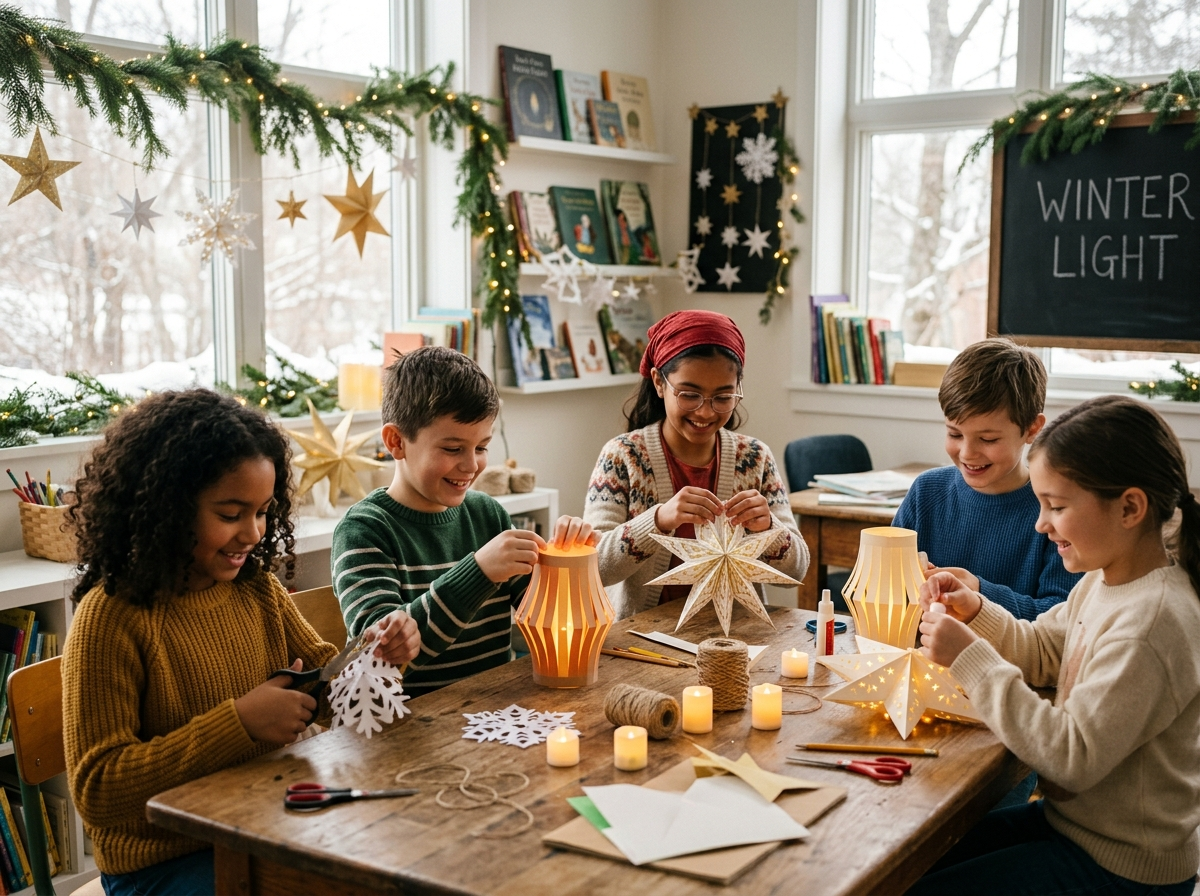
- A craft that travels. Paper lanterns, snowflakes, or a “light” theme (candles, stars, lamps) shows up across many winter celebrations and belongs to none exclusively.
- Watch the snacks and the songs. Keep the playlist mixed rather than all carols, and make sure the food works for dietary and religious needs, not just allergies.
The goal is simple: no child should have to sit out the theme, the craft, or the snack because of what their family does or doesn’t celebrate.
By grade
Ideas by grade level
What delights a kindergartner bores a fifth‑grader. Roughly: K–2 loves simple crafts, a read‑aloud, and easy movement games — keep instructions short and hands busy. Grades 3–5 can handle a bigger craft, team games and light competition, trivia, or a STEM‑ish build like a paper‑snowflake or gingerbread‑structure challenge. Tailor the difficulty and you’ll keep the whole room engaged.
What to skip
Classroom party mistakes to avoid
The avoidable ones: skipping the allergy check — never optional. One long activity — attention spans are short, so rotate stations. Too few helpers — you want roughly one adult per station. A strictly‑Christmas theme — go winter or “celebrations around the world” so every family’s included. Messy crafts with no cleanup plan — pick low‑mess options and build in five minutes to tidy. And forgetting the boring supplies — wipes, trash bags, and paper towels are what you’ll actually reach for first.
Keep going
More ideas to borrow
Want more to pull from? Our party games and theme ideas have plenty that scale down for kids, and the budget guide helps if you’re covering supplies yourself.
Quick answers
Classroom holiday party FAQ
What are good classroom holiday party ideas?
Set up rotating stations — a craft (ornament or card making), a simple game (bingo, snowball toss), an allergy‑safe snack, and a quiet make‑and‑take — then finish with one whole‑class game. Always check with the teacher first and frame it as an inclusive winter celebration.
What snacks are safe for a classroom party?
Get the allergy list from the teacher and plan around it. Safer options are whole fruit like clementines, pretzels, popcorn, and veggie cups, plus packaged items with clear labels (many schools require store‑bought, labeled food). Avoid nuts unless confirmed safe, watch for cross‑contamination, and keep a non‑food alternative ready.
How do I make a classroom party inclusive?
Frame it as a winter or “celebrations around the world” party rather than a single holiday, and let traditions like Hanukkah, Diwali, Lunar New Year, Kwanzaa, and Las Posadas be part of the content. Invite kids to share a family tradition if they want, keep the music and food mixed, and make sure no activity leaves anyone out.
How long should a classroom party be, and how do I run it?
Usually about an hour. Split the class into small groups and rotate them through 3–4 short stations, then bring everyone together for one group game and a quick cleanup. Recruit a parent helper per station and bring everything pre‑portioned.
How many parent helpers do I need?
Aim for about one adult per station — typically three or four. Send a sign‑up a week ahead that lists each station and supply as its own line; people commit far more readily to one specific job than to a vague “help out.”
Do I need to clear the party with the school?
Yes, always coordinate with the classroom teacher, who knows the school’s policies on food, holidays, and allergies. Many schools have specific rules (packaged food only, no religious framing), so confirm before you plan or buy anything.
Class party, sorted
Clear it with the teacher, plan snacks around allergies, run short rotating stations with one helper each, and keep it inclusive. A happy class and a calm hour.